Quick Answer
Ship arrest is a court ordered detention of a vessel used to secure a maritime claim, so that the claimant has something of value to enforce against if it wins. In the UAE, arrest is governed by the 2023 Maritime Law and is available only for recognised maritime claims, such as cargo damage, unpaid bunkers, crew wages, collision or unpaid charter hire. An application is made to the competent court where the ship is berthed, and once the arrest order is granted the claimant must file the substantive claim within a short period, generally eight days, or the arrest lapses. The vessel is released when adequate security is provided.
Key points
- Arrest is only available for a recognised maritime claim from the defined list.
- The application is made to the court with jurisdiction over the port where the ship lies.
- The substantive claim must usually be filed within about eight days of the arrest order.
- The claimant may have to provide counter security against wrongful arrest and for crew and upkeep.
- The ship is released on security such as a bank guarantee or a P&I club letter of undertaking.
Ship arrest is one of the most powerful tools in maritime disputes. A vessel is a moving, high value asset that its owner needs back in service quickly, so detaining it applies immediate commercial pressure and, just as importantly, prevents the asset from sailing out of reach before a claim is decided. The UAE overhauled its maritime framework with a new Maritime Law in force from 2024, bringing arrest procedures closer to international standards. This guide explains when a ship can be arrested here, how the process runs, and how a vessel is released.
What ship arrest is for
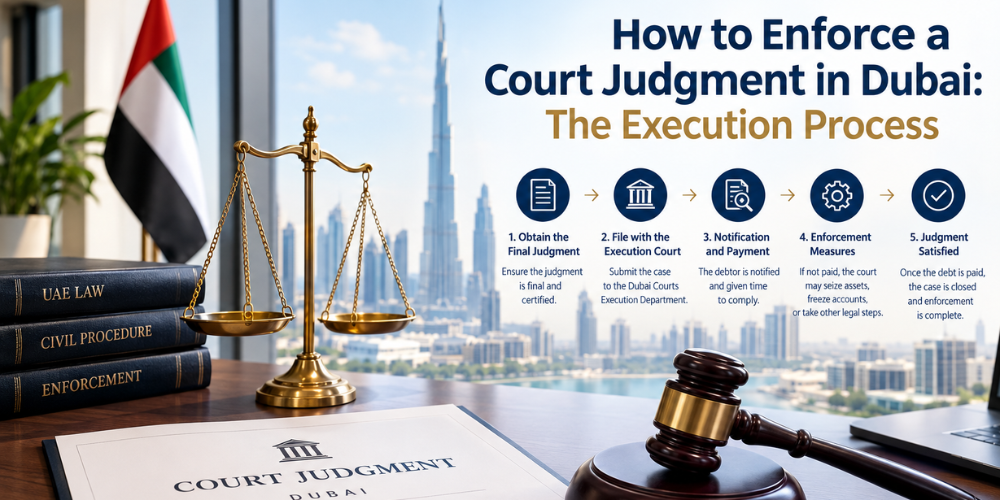
Arrest is a security measure, not a judgment on the merits. Its purpose is to hold the vessel so that, if the claimant succeeds, there is an asset to enforce against, and to bring the shipowner to the table in the meantime. It is closely related to the enforcement mindset that runs through debt recovery generally, where securing an asset early often matters more than the eventual paperwork, a theme covered in our guide on enforcing a court judgment through the Execution Court.
Which claims allow a ship to be arrested
A vessel can only be arrested for a recognised maritime claim. The categories include, among others, damage caused by the vessel, loss or damage to cargo, unpaid crew wages, salvage, supplies such as bunkers and equipment, unpaid charter hire, collision, towage, ship mortgage, and disputes over ownership. The 2023 Maritime Law broadened the list to reflect modern shipping, adding matters such as environmental damage caused by the vessel, wreck removal and port charges. If your claim falls within a recognised category, arrest is on the table; if it does not, it is not, which is the first question to resolve.
Cargo interests in particular often move from a stalled claim to an arrest to force resolution, as explained in our guide on cargo claims in the UAE.
How the arrest process works
- Confirm a maritime claim and locate the vessel. The ship must be within the jurisdiction of a UAE court, typically berthed at or calling a UAE port.
- Apply to the competent court. A precautionary arrest application is filed with the civil court that has jurisdiction over the port. The application can often be dealt with quickly.
- Provide any counter security required. The court may require the claimant to put up security to compensate the owner if the arrest turns out to be wrongful, and to cover crew wages and vessel maintenance during the arrest.
- The arrest order is granted and served. Port and authorities are notified and the vessel is prevented from sailing.
- File the substantive claim within the deadline. The underlying claim must be commenced before the competent court within a short period, generally eight days of the arrest order, or the arrest can be treated as void.
Sister ship arrest
UAE law generally allows the arrest of a sister ship, meaning another vessel in the same ownership, in respect of a maritime claim. This is useful when the ship connected to the claim is not within reach but a related vessel is. Sister ship arrest is not available for every category, and is typically excluded for claims concerning ship sale contracts, mortgages, and disputes over ownership or possession.
How an arrested ship is released
The owner will usually want the vessel released fast, and the law provides for that on adequate security. Where the security offered is equivalent to the amount in dispute, the court can lift the arrest. UAE courts accept several forms of security, including cash or a manager's cheque deposited with the court, a guarantee from a UAE bank, and, under the new law, a letter of undertaking from a P&I club, which brings the UAE into line with international practice. Releasing the ship on security does not mean the owner has admitted liability; the dispute then continues on the merits while the vessel trades on.
There are limited exceptions where the dispute concerns ownership, possession or entitlement to the ship's earnings, in which case the court may keep the arrest in place even against security and instead arrange for the vessel to be managed.
Getting it right, and the risk of getting it wrong
Arrest is fast and forceful, but it is not risk free. An arrest that turns out to be unjustified can expose the claimant to a claim for the owner's losses, which is why counter security is required. Equally, missing the deadline to file the substantive claim can undo the whole exercise. The value of experienced representation is in confirming the claim qualifies, preparing the application to succeed at first attempt, and then converting the leverage of the arrest into payment or security. Where the dispute also has a commercial contract dimension, it is handled alongside our corporate and commercial lawyers in Dubai.
Frequently asked questions
Can I arrest a ship in the UAE?
Yes, if you have a recognised maritime claim, such as cargo damage, unpaid bunkers, crew wages, collision or unpaid charter hire, and the vessel is within the jurisdiction of a UAE court. Arrest is not available for claims outside the recognised categories.
How long does it take to arrest a vessel?
A precautionary arrest application can often be dealt with quickly once the claim and vessel details are ready. After the order is granted, the substantive claim must be filed within a short period, generally eight days, or the arrest can lapse.
Do I have to provide security to arrest a ship?
Often yes. The court may require the claimant to provide counter security to compensate the owner if the arrest is wrongful and to cover crew wages and maintenance during the arrest.
How is an arrested ship released?
The owner provides adequate security equivalent to the claim, such as a cash deposit, a UAE bank guarantee or a P&I club letter of undertaking. On acceptable security the court lifts the arrest and the dispute continues on the merits.
Can I arrest a sister ship?
Generally yes, another vessel in the same ownership can be arrested for a maritime claim, which helps when the ship tied to the claim is out of reach. It is excluded for certain claims such as ship sale, mortgage and ownership disputes.
Speak to a Dubai maritime lawyer
Rashid Al Suwaidi Advocates prepares and executes vessel arrests, meets the filing deadlines, negotiates release security, and pursues the underlying maritime claim to recovery. To discuss arresting a vessel or securing a maritime claim, contact the firm on +971 50 767 9696 or through the website. For the full service, see our maritime and shipping lawyers in Dubai.
This article is general information about ship arrest in the UAE and is not legal advice. Procedures, deadlines and security requirements can change and every matter turns on its own facts. For advice on arresting a specific vessel, speak with a qualified advocate.